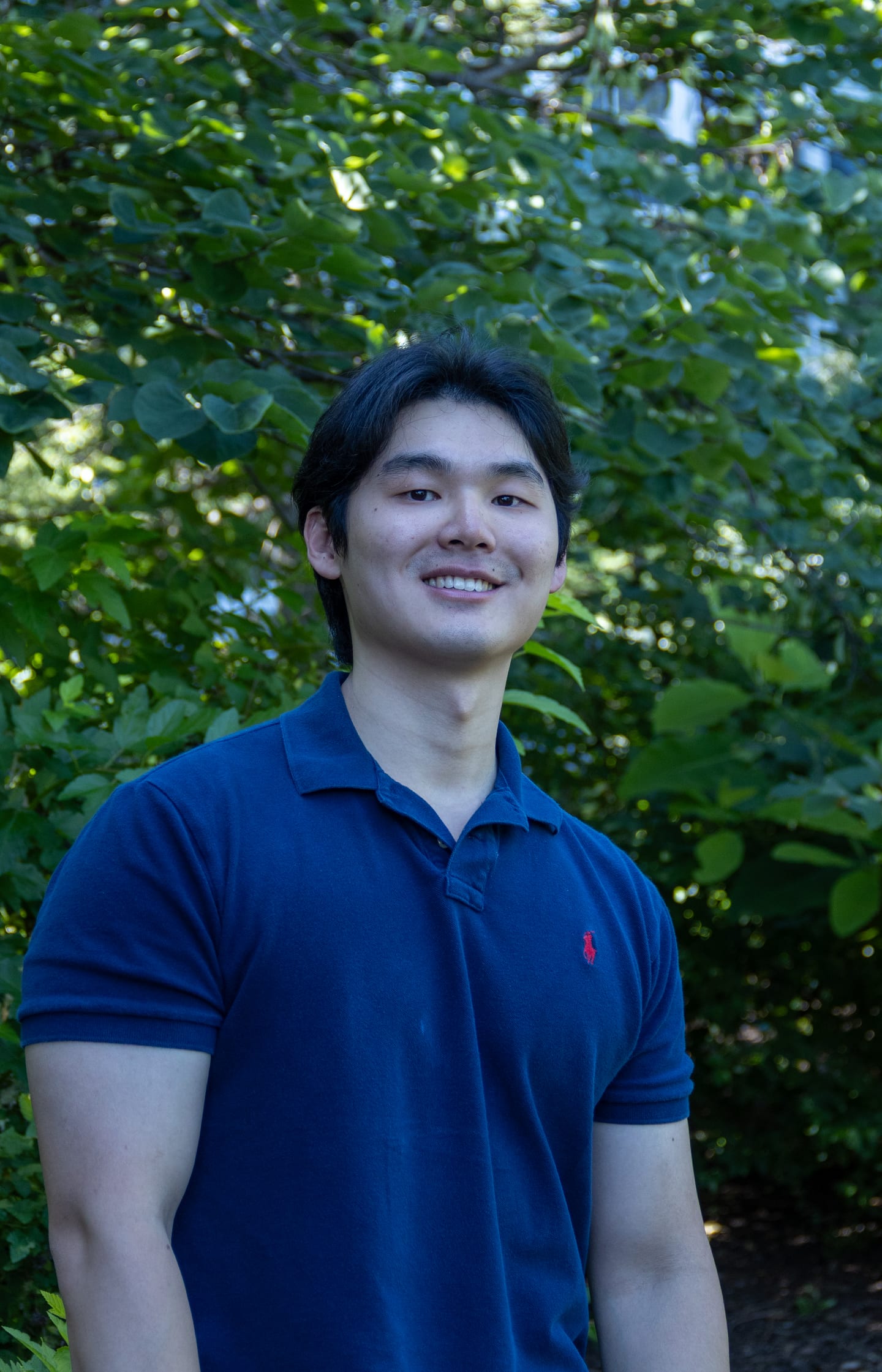
I started trading at fifteen and got tired of being the one executing.
It began by accident. My father was home one summer, at the computer instead of at work, and I kept asking what he was doing until he joked that he’d lost everything because of me. Then he started explaining. What struck me first was that the number changed while I did nothing. I treated it like a game and lost most of my allowance, then bought stock in the company behind a game I played constantly and watched it triple through COVID.
Several years of day trading followed. That’s where I learned the Korean market as a physical object rather than a dataset: daily price limits and what a stock does the morning after it locks up, single-price auctions, event patterns that only make sense there. It also went the way it usually goes. More hours at the screen, more stress, worse returns.
Looking for a way out, I found that what I wanted was called quantitative trading, that it needed statistics and software in roughly equal measure, and that computational data science was the shortest path to both. That’s why I’m in this major. I didn’t pick it from a course catalog; trading by hand had worn me out.
I grew up moving between Korea and Romania and came to the United States for high school. Moving that often teaches you early that rules are local. What counts as normal in a market, an institution or a classroom is a local convention, and the interesting part is usually the part that doesn’t transfer. I liked math from Romania onward, hit a wall back in Korea against classmates drilled years ahead of the curriculum, and found my footing again in science, which took me into the gifted program.
I’d like to say I got to work right away. I didn’t; my first two years of college were mostly fun. Six months in China changed that. I came back wanting to learn the language, and wanting to be near the front of what I’d just watched a very large market build at speed. Military service was where I acted on both. For eighteen months as an intelligence analyst, I studied Mandarin to HSK 5 (270/300) and taught myself machine learning and deep learning from the ground up, with nothing else competing for the time. When I came back to school the coursework was easy, because I’d already done a harder and less organized version of it alone. I’m now a senior at Penn State in Computational Data Science and Statistics, with a minor in Mathematics, and I work in Korean, English and Mandarin.
Eureka is where the automation question went. It’s a quantitative platform in three parts, a data pipeline, a research and modeling layer, and eventually execution with portfolio optimization, built so that a revision in a filing can move into a feature, a risk estimate and a position with point-in-time correctness holding at every step. The pipeline is what runs today: well over a hundred million rows of Korean equities, derivatives, bonds and filings on a global macro layer, loaded and checked every night without supervision.
Artemis came out of my own job search. Past a few dozen applications nobody keeps a spreadsheet honest, so I built a tracker that fills itself from a posting’s link. Networking came next and turned out to be where most of the value is. Then the applications themselves: a browser extension fills the same information into form after form in seconds, with a résumé and cover letter tailored to that posting from the user’s own experience. The posting index people notice first is the newest layer and the least of the point.
This past summer, in Penn State’s SURE program, I asked whether the onset of a volatility regime can be forecast at daily frequency. I built GARCH and particle-filter stochastic volatility models from scratch, pre-registered the detection experiment, and got a 42% detection rate at p < 0.001. Then I took my own result apart and showed it measured the wrong thing. The null is the finding, and establishing it as a powered null rather than an inconclusive one is the part I’d defend.
This fall I started research at Penn State’s EMPower Lab on graph neural networks for power-grid stability: high-frequency, spatially correlated sensors and rare events that matter enormously, the same shape of problem as markets in a different domain. Alongside it I’m working on spatio-temporal forecasting for equities, where the question is how much of a market’s structure can be built into a model instead of left for it to learn.
What I want to work on next: Bayesian methods and uncertainty quantification, graph neural networks, latent-variable models, risk quantification, and the practical question of how much deterministic structure has to surround a language model before you can trust what comes out of it.
I’m looking for full-time roles starting in 2027 in quantitative research and in data and ML engineering, and I’m applying to graduate programs in parallel. If any of this is close to what you’re working on, I’d like to hear about it: taemin.kang@gmail.com.